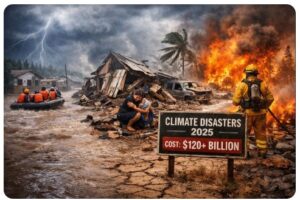
The year 2025 will be remembered as one of the most devastating chapters in the planet’s climate history. Across continents, extreme weather events intensified in scale, frequency, and destruction, leaving behind shattered communities, strained economies, and a sobering reminder that the climate crisis is no longer a distant threat. Floods, wildfires, cyclones, and heatwaves together caused more than $120 billion in economic losses and claimed thousands of lives, underscoring the growing cost of inaction.
From Asia to the Americas, floods emerged as one of the deadliest climate disasters of the year. Unusually heavy rainfall overwhelmed rivers, dams, and urban drainage systems, submerging entire towns within hours. Families were displaced overnight, crops were destroyed at critical harvest periods, and essential infrastructure such as roads, bridges, and power lines suffered extensive damage. In many regions, what were once considered “once-in-a-century” floods are now occurring with alarming regularity.
Wildfires also carved a destructive path across forests, grasslands, and residential areas. Prolonged heatwaves and dry conditions turned vast landscapes into fuel, allowing fires to spread faster and burn longer than ever before. Beyond the immediate loss of homes and wildlife, thick smoke blanketed cities for weeks, triggering health emergencies and forcing millions to breathe hazardous air. The economic impact extended far beyond firefighting costs, affecting tourism, agriculture, and long-term land productivity.
Meanwhile, powerful cyclones and storms battered coastal regions, leaving destruction in their wake. Stronger winds and higher storm surges flattened homes, crippled ports, and eroded coastlines. Rising sea levels amplified the damage, pushing seawater deeper inland and contaminating freshwater sources. For island nations and low-lying coastal communities, recovery has become increasingly difficult as each new storm arrives before the scars of the previous one have healed.
What makes 2025 particularly alarming is not just the scale of destruction, but the clear pattern behind it. Scientists have long warned that rising global temperatures would intensify extreme weather events. This year’s disasters offer painful confirmation. Warmer air holds more moisture, leading to heavier rainfall and floods. Hotter temperatures dry out land, fueling wildfires. Warmer oceans provide extra energy to storms, making cyclones more powerful and unpredictable.
The human cost of these disasters cannot be measured in dollars alone. Thousands of lives were lost, and millions more were forced to leave their homes. Children missed months of schooling, livelihoods were wiped out, and mental health crises surged among survivors. For vulnerable communities with limited resources, recovery often feels impossible, deepening inequality and pushing families into long-term poverty.
Yet, within this grim reality lies a critical opportunity. The disasters of 2025 have intensified global conversations about climate action, resilience, and preparedness. Investments in early warning systems, climate-resilient infrastructure, and sustainable energy are no longer optional—they are essential. Reducing emissions, protecting natural ecosystems, and supporting vulnerable populations can still alter the trajectory ahead.
The message from 2025 is clear and urgent. Climate disasters are escalating, their costs are soaring, and the consequences are deeply human. How the world responds now will determine whether future years bring greater resilience or even greater loss.