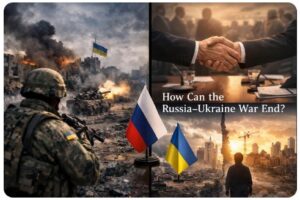
The question of how the Russia–Ukraine war can end has become one of the most urgent and complex issues of our time. After years of fighting, destruction, and global ripple effects, the answer is no longer simple or purely military. History shows that wars like this rarely end with a single event. Instead, they conclude through a mix of exhaustion, negotiation, pressure, and compromise.
One possible path is a negotiated settlement. This does not mean instant peace or full agreement, but a structured pause that gradually reduces violence. Such negotiations usually begin quietly, often through intermediaries, before reaching formal talks. Any lasting agreement would need to address core security concerns, territorial disputes, and guarantees that reduce the fear of future attacks. Without mutual assurances, even a signed deal risks collapsing.
Another factor is military stalemate. Many prolonged conflicts end when neither side can achieve a decisive victory. As costs rise and gains shrink, continuing the war becomes harder to justify domestically and economically. A stalemate does not bring peace by itself, but it often pushes leaders toward dialogue they previously resisted. When the battlefield offers no clear answers, diplomacy gains value.
International pressure also plays a crucial role. Economic sanctions, diplomatic isolation, and global opinion can influence decision-making over time. While external pressure alone rarely ends wars, it can change the cost-benefit calculations of continuing them. At the same time, international mediation can help frame compromises in ways that allow both sides to claim progress without appearing to surrender.
The human and economic toll cannot be ignored. Civilian suffering, displacement, and infrastructure damage accumulate year after year. As societies grow weary, public opinion becomes a powerful force. Citizens begin asking not who is winning, but how the war ends. This internal pressure can shape political choices more strongly than external demands.
A less discussed but critical element is post-war vision. Conflicts often drag on when parties cannot imagine what peace would look like. Ending the war requires more than stopping gunfire; it requires a credible future reconstruction, security arrangements, and reintegration into global systems. When peace offers tangible benefits, it becomes easier to defend politically.
Importantly, the war is unlikely to end with a perfect outcome for any side. Most modern conflicts conclude with imperfect peace, marked by unresolved tensions and gradual normalization rather than celebration. The goal is not absolute victory, but sustainable stability.
Ultimately, the Russia–Ukraine war will end not through one dramatic moment, but through a convergence of factors: battlefield realities, diplomatic persistence, international involvement, and societal fatigue. The real challenge is transforming silence after fighting into lasting peace. That transition is slow, fragile, and difficult but history suggests it is the only path forward.