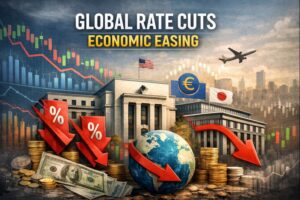
In a move that is reshaping the global financial landscape, the world’s most powerful central banks have launched their most aggressive policy easing campaign in more than a decade. Interest rates are being cut across major economies, signaling a coordinated effort to cushion slowing growth and restore confidence in an increasingly fragile global economy.
This shift marks a clear turning point. For years, central banks were focused on fighting inflation through higher rates and tighter financial conditions. That era is now giving way to a new priority: preventing economic stagnation. With consumer spending cooling, manufacturing output weakening, and global trade losing momentum, policymakers are choosing to act early rather than risk deeper downturns.
Lower interest rates serve several critical purposes. First, they reduce borrowing costs for households and businesses, encouraging spending and investment. Mortgages become more affordable, companies find it easier to finance expansion, and governments can manage debt with less pressure on budgets. In theory, this creates a ripple effect that stimulates growth across the economy.
Financial markets have responded quickly. Equity markets in many regions have rallied on expectations of cheaper capital and improved liquidity. Bond yields have fallen, reflecting investor confidence that central banks are committed to supporting growth. Currencies, meanwhile, are adjusting as rate differentials shift, adding a new layer of complexity for global trade and capital flows.
However, this easing push is not without risks. Cutting rates too quickly or too deeply could reignite inflation, particularly if supply constraints return or energy prices surge. There is also the concern that prolonged low rates may inflate asset bubbles, pushing stock and property prices beyond sustainable levels. Central banks are walking a narrow path, balancing short-term support against long-term stability.
Another important dimension is coordination. While each central bank acts independently, the near-simultaneous easing across multiple economies suggests a shared recognition of global headwinds. Slower growth in one major economy can quickly spill over into others, making collective action more effective than isolated moves.
For ordinary people, the impact will be mixed. Borrowers may find relief through lower loan and credit costs, while savers could see reduced returns on deposits. Businesses, especially small and medium-sized enterprises, may benefit from improved access to financing, potentially supporting jobs and wages over time.
Looking ahead, the success of this policy reset will depend on more than interest rates alone. Structural reforms, productivity improvements, and fiscal support will play a crucial role in determining whether easier monetary policy translates into lasting growth.
The message from central banks is clear: they are ready to act decisively to protect the global economy. Whether this bold easing cycle becomes a bridge to renewed expansion or merely a pause before further challenges will define the next chapter of the world’s economic story.